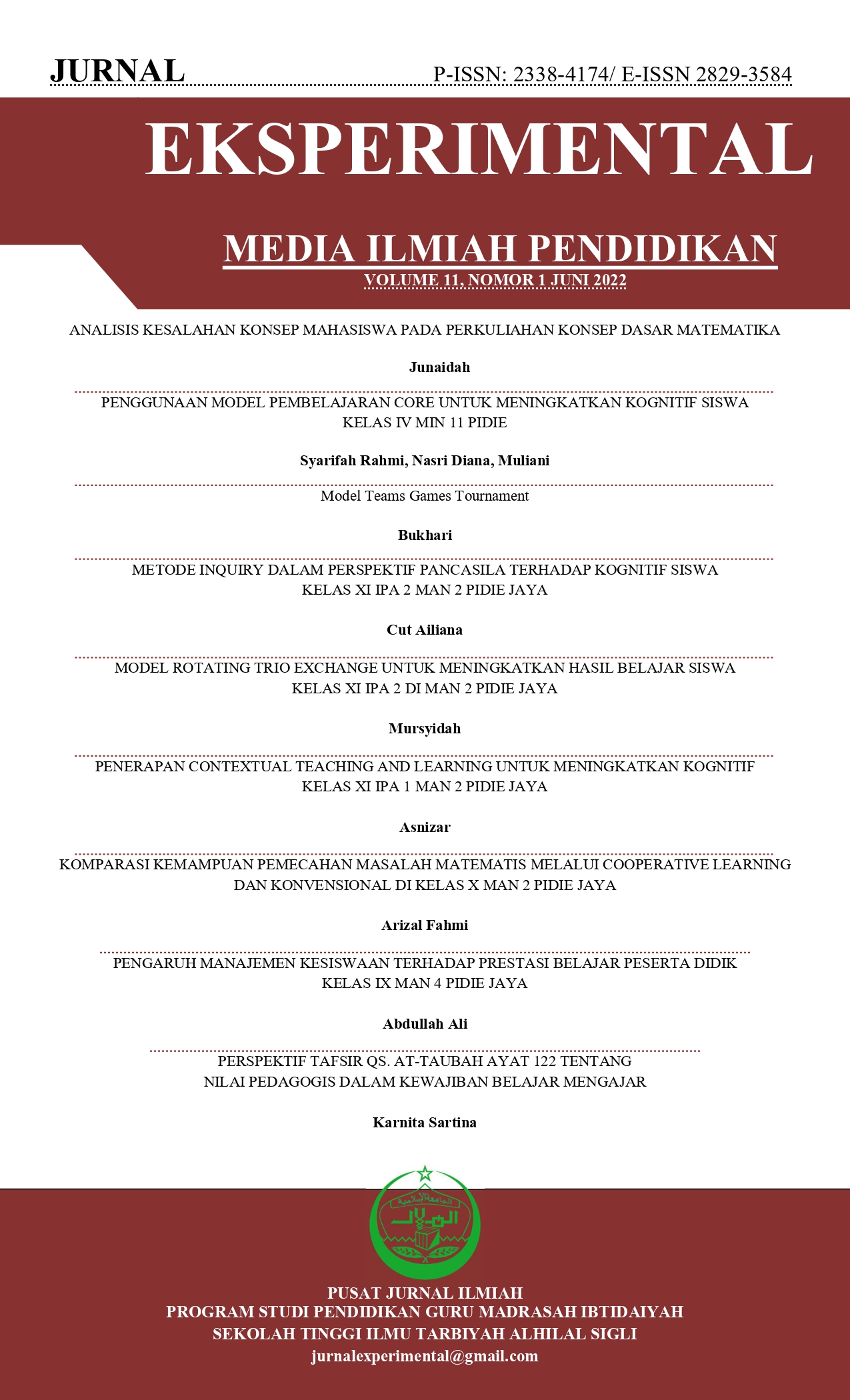
MODEL ROTATING TRIO EXCHANGE UNTUK MENINGKATKAN HASIL BELAJAR SISWA KELAS XI IPA 2 DI MAN 2 PIDIE JAYA
Keywords:
Rotating Trio Exchange, Model, Learning Outcomes, 11th GradeAbstract
This study aimed to determine the improvement in learning outcomes for the 11th Grade Science 2 students following the implementation of the rotating trio exchange model. research method used is PTK (Classroom Action Research). The subjects consisted of 18 students from the 11th Grade Science 2 class at MAN 2 Pidie Jaya during the 2021/2022 academic year. Pre-test results indicated that in Cycle I, scores ranged from a low of 55 to a high of 80, with an average of 67.22; 22.22% of students achieved scores above 75, while 66.67% scored below 75. In Cycle II, 33.33% of students achieved scores above 75, while the remaining 66.67% scored below 75. In Cycle III, 88.89% of the eighteen students successfully achieved scores above 75, whereas 11.11% did not. Therefore, it is concluded that the implementation of the rotating trio exchange model can improve student learning outcomes.
References
Anni, C. T. 2004. Psikologi Belajar. Semarang: Universitas Negeri Semarang Press Arikunto, S. 2010. Prosedur Penelitian: Suatu Pendekatan Praktik. Jakarta: Rineka Cipta
Dimyati dan Mudjiono. 2006. Belajar dan Pembelajaran. Jakarta, Rineka Cipta
Isjoni. 2016. Pembelajaran Kooperatif Meningkatkan Kecerdasan Komunikasi Antar Peserta Didik. Yogjakarta: Pustaka Belajar
Mulyasa, E. 2008. Strategi Belajar Mengajar. Bandung: Pustaka Setia
Mustakim, N & Riska, R. 2021. Implementation Of Cooperatif Learning Model Type Think Pair Share (TPS) To Improve Arabic Vocabulary Mastery of Students SDN 3 Beureunuen. PEDIR: Journal of Elementary Education. Vol 1 No 2
Purwanto, M. N. 2002. Psikologi Pendidikan. Bandung: Remaja Rosda Karya
Silberman, M. L. 2006. Active Learning. Bandung: Nusamedia dan Nusantara
Downloads
Published
Issue
Section
License
Copyright (c) 2022 Mursyidah

This work is licensed under a Creative Commons Attribution 4.0 International License.